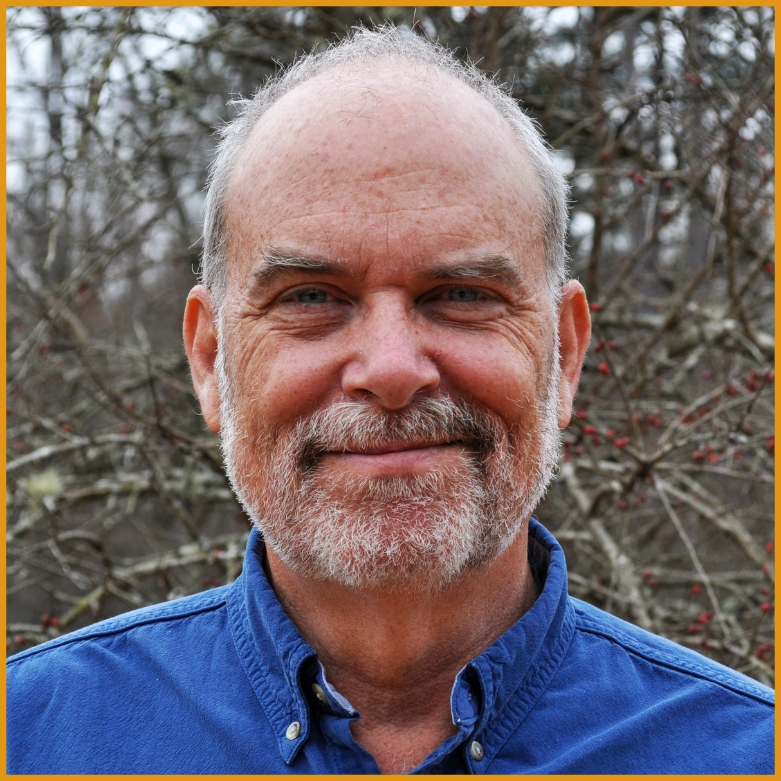
Alan Weakley is a plant taxonomist, ecologist, and conservationist specializing in the Southeastern United States. He holds a B.A. from UNC-Chapel Hill and a Ph.D. from Duke University. He has worked as a botanist and ecologist for the North Carolina Natural Heritage Program and as a regional and chief ecologist for The Nature Conservancy and NatureServe, and currently serves as Director of the UNC-CH Herbarium (a department of the North Carola Botanical Garden), teaches as Adjunct Professor at UNC-Chapel Hill and the Highlands Biological Station, serves on the NatureServe Board of Directors, and as Chief Botanist of the Southeastern Grasslands Initiative. In the course of his career, he has worked cooperatively with most federal and state land-managing agencies in the southeastern United States.
Alan is co-author (with Chris Ludwig and Johnny Townsend) of the Flora of Virginia and the Flora of Virginia App, which have received awards, including the Thomas Jefferson Award for Conservation. He is also co-author (with Laura Cotterman and Damon Waitt) of Wildflowers of the Atlantic Southeast. Working with a team of botanists and data scientists across the southeastern United States, Alan is leading a project to complete an enhanced version of the Flora of the Southeastern United States, served on multiple platforms, including web app, pdfs, and five flora apps, FloraQuest, covering the 25-state region.
The FloraQuest apps are intended by Alan and the Southeastern Flora Team as a modernized reinvention of “the flora”, designed to present the standard kinds of information usually found in a scientific flora (dichotomous keys, information on habitat, distribution, taxonomy, scientific references) with additional conservation-related information (rarity, conservatism, habitat dependency) and innovative identification tools (graphic keys, diagnostic photos) made possible by digital technology. The goal is to empower biodiversity conservation by a greater diversity of people, including nonprofessionals wanting to contribute through citizen or participatory science.
Alan has authored over 100 journal articles and book chapters and is in high demand as a speaker on plant taxonomy, community classification and mapping, biogeography, and biodiversity conservation. He is active with the Flora of North America project and the United States National Vegetation Classification and serves as an advisor to the N.C. Natural Heritage Program and N.C. Plant Conservation Program, and was a co-founder of the Carolina Vegetation Survey. As a trustee and board member of public and private conservation granting agencies and foundations, he has helped direct $400,000,000 of land conservation grants in the Southeastern United States.
The Southern Blue Ridge Mountain Ecoregion has had a unique role through deep time in maintaining and generating biodiversity in all terrestrial and freshwater aquatic organism groups. Acting as a refugium through past climate changes, the Southern Blue Ridge has retained lineages that then expand out into and enrich the biota throughout eastern North America. We will explore the importance of this history, and the past and present conservation challenges and successes that have made this one of the most intact ecoregions in eastern North America. Along the way, we’ll explore examples of special habitats and organisms for which the Southern Blue Ridge has been critical: alpine, serpentine, temperate rainforests, vertical wetlands, cove forests, lampshade spiders, salamanders (giant, arboreal, and otherwise), pitcherplants, heaths, trilliums, and the list goes on!
Support the people who manage our natural areas and protect biodiversity in perpetuity.